
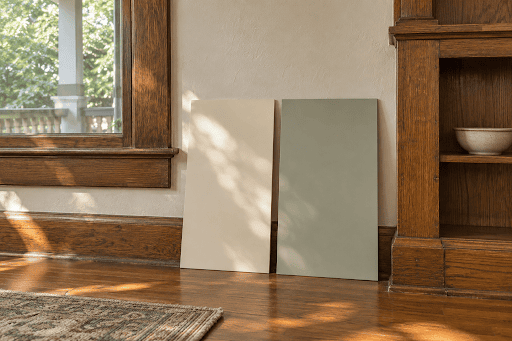
If your East Nashville or Inglewood bungalow combines original woodwork, older architectural details, and newer flooring or furniture, choosing an interior paint color can feel more complicated than picking a favorite shade from a fan deck.
Older homes often contain several generations of materials and finishes. You may have original stained trim beside updated flooring, newer countertops alongside older built-ins, or repaired plaster walls mixed with more recent drywall. The right paint palette can help those elements feel connected without making every room identical or removing the character that made you love the house in the first place.
At Pointer Painting, formerly Davis Custom Finishes, we can help you evaluate your home’s existing surfaces, architecture, and natural light as you plan your interior painting project. Start with the features you’re keeping, then choose colors and finishes that work with the home you actually have.
Start With the Elements You Are Keeping
Before looking at wall colors, identify the permanent or expensive features you don’t plan to change.
These may include:
- Hardwood or other flooring
- Original stained woodwork
- Built-in cabinetry
- Brick fireplaces
- Tile
- Countertops
- Kitchen cabinets
- Stone
- Large architectural features
- Major pieces of furniture
These elements already establish colors and undertones within the room.
A wall color that appears perfectly neutral on a small sample may reveal yellow, pink, green, blue, or gray undertones when placed next to your flooring or woodwork.
Instead of trying to choose paint independently, use the materials that are staying as the foundation for your palette.
Original Wood Trim Changes the Color Conversation
Original stained woodwork can be one of the defining features of an older Nashville bungalow.
If you’re keeping it, compare wall colors directly beside the wood.
Different wood tones can interact differently with paint. A warm wall color may complement one stain while making another feel overly orange or yellow. A cooler neutral may provide attractive contrast in one room but feel disconnected in another.
The goal doesn’t necessarily have to be matching the wood.
Sometimes a subtle contrast allows original casings, baseboards, doors, or built-ins to stand out as intentional architectural features.
Before deciding to paint original stained trim, consider whether you actually dislike the wood or simply dislike the current wall color surrounding it. Changing the walls may alter the relationship considerably.
Painted Trim Needs to Be Considered Too
Not every older Nashville home still has natural wood trim.
Some homes have trim that’s been painted several times over the years. If the trim will remain painted, evaluate its color alongside your proposed wall color.
A bright white may look crisp and clean in one room but noticeably cool against warmer walls, flooring, or lighting in another.
You may prefer a softer white, another neutral, or even a trim color that intentionally contrasts with the walls.
If both the walls and trim are being repainted, choose them together rather than selecting one and hoping the other works afterward.
Don’t Assume Every Room Needs White Trim
White trim is common, but it isn’t the only option.
Depending on the bungalow’s architecture and your decorating style, you might consider:
- Warm off-white
- Soft neutral trim
- Deeper contrasting trim
- Trim coordinated with built-ins
- Walls and trim in related shades
- A more complete color-drenched approach in selected rooms
The amount of contrast affects how prominently the home’s architectural details appear.
If your bungalow has substantial door casings, crown molding, built-ins, or other detailed woodwork, deciding whether to emphasize or soften those features can help guide the trim color.
Use Natural Light as a Guide
Natural light can dramatically change the appearance of interior paint.
Window direction, mature trees, porch depth, neighboring homes, and the room’s position within the house can all influence how much daylight reaches a wall.
This is particularly important in older bungalows with deeper rooms or smaller original windows.
One wall may receive strong daylight while another remains shaded for much of the day.
Don’t judge a paint color from only one location.
View samples:
- Near windows
- On shaded walls
- In morning light
- During afternoon light
- On cloudy days when possible
- Under your normal evening lighting
You need the color to work during the hours you actually use the room.
Evaluate Evening Lighting Too
Nashville sunshine isn’t the only light affecting your paint color.
Lamps, recessed fixtures, pendants, sconces, and other artificial lighting can change how a color appears after dark.
A wall color that looks balanced during the afternoon may become noticeably warmer or cooler under your evening lighting.
Before making a final selection, turn on the fixtures you normally use and look at your samples again.
This is especially important in living rooms, dining rooms, bedrooms, and other spaces you primarily use in the evening.
Modern Doesn’t Have to Mean Stark
Updating an older bungalow doesn’t mean removing everything that makes it feel like an older home.
A contemporary palette can still work with original architectural details.
Depending on your existing materials, you might consider:
- Warm whites
- Softened neutrals
- Earthy greens
- Muted blues
- Warm grays
- Grounded accent colors
- Deeper colors in defined spaces
The objective isn’t to make the house look artificially old or aggressively modern.
Instead, look for colors that make original features feel intentional while supporting the way you want the home to feel today.
Dark Colors Can Work in Older Homes
Smaller rooms don’t automatically need pale colors.
A deeper color can create a comfortable, intentional atmosphere when it works with the room’s architecture and lighting.
Potential locations might include:
- Dining rooms
- Home offices
- Bedrooms
- Powder rooms
- Built-ins
- Feature walls
- Other clearly defined spaces
Before committing, view a large enough sample to understand how the color interacts with the flooring, trim, and lighting.
Dark colors can have a much stronger presence across an entire wall than they do on a small paint chip.
Connect Adjoining Rooms Without Making Them Identical
Many bungalows have clear sightlines through several rooms.
Stand in doorways and look at which walls and trim are visible together.
You don’t have to paint every room the same color to create continuity.
Instead, you might repeat:
- Related undertones
- A consistent trim color
- Similar color intensity
- Selected accent colors
- Colors drawn from shared flooring or woodwork
A living room, dining room, and hallway can each have their own character while still feeling like parts of the same home.
Let Architectural Features Guide Accent Colors
If your bungalow contains a fireplace, built-in cabinetry, original doors, substantial trim, or another architectural feature, consider whether it should influence the palette.
An accent color can help emphasize a feature that already deserves attention.
The strongest accent choices usually have a reason for being where they are.
Rather than selecting a random wall because it’s easy to paint, consider how the room is arranged and where your eye naturally travels.
Older Walls Deserve a Closer Look
Older Nashville homes may contain plaster, drywall from later renovations, previous repairs, or a combination of materials.
Before choosing the final sheen, inspect the walls.
Look for:
- Hairline cracks
- Old patches
- Dents
- Uneven texture
- Ridges
- Previous repairs
- Surface waves
- Peeling coatings
Fresh paint changes the color and reflectivity of the surface, but it doesn’t physically flatten the wall underneath.
If certain imperfections bother you now, point them out during your estimate so the preparation can be discussed before painting begins.
Sheen Can Highlight or Soften Surface Variation
Paint sheen affects how much light reflects from the wall.
Higher-sheen finishes generally reflect more light and may make patches, waves, ridges, and other surface variations easier to see.
Lower-sheen finishes tend to create a softer appearance and may be more forgiving of minor imperfections.
However, appearance isn’t the only consideration.
Cleaning needs, room use, moisture, traffic, and the performance of the specific paint product should also influence finish selection.
A quiet bedroom and a busy hallway may have different priorities.
Consider Ceilings as Part of the Palette
The ceiling doesn’t automatically have to be ignored while everything else changes.
A traditional lighter ceiling may provide the contrast you want, but other rooms may benefit from a softer relationship between the walls and ceiling.
If the existing ceiling will remain, compare your wall samples beside it.
Fresh wall color can sometimes make an older ceiling finish appear noticeably different.
Decide whether ceilings are included before the painting scope is finalized.
Think About the Home as a Whole
Before choosing each room independently, consider what happens as you move through the house.
You may want some spaces to feel brighter and more open while others feel deeper and more intimate.
That’s fine.
A successful palette doesn’t require every room to produce the same mood. It needs enough visual relationships that transitions feel deliberate.
Flooring, original trim, repeated architectural details, and consistent finish choices can help connect rooms even when the wall colors change.
Frequently Asked Questions
Should an older Nashville home use historic paint colors?
Not necessarily. Historic palettes can provide inspiration, but you don’t have to recreate a particular period. The appropriate colors depend on your existing materials, architecture, lighting, furnishings, and the appearance you want.
Can dark paint colors work in a bungalow?
Yes. Darker colors can work well when they’re chosen intentionally for the room’s lighting, architecture, and use. Dining rooms, offices, bedrooms, built-ins, and feature areas may all be worth considering.
Should all trim be the same color throughout the house?
It doesn’t have to be. A consistent trim color can create continuity, but homes containing both original stained wood and painted trim may benefit from a more flexible approach. Plan transition points intentionally.
What paint finish works best on older plaster walls?
There isn’t one finish that’s right for every plaster wall. Lower-sheen finishes generally make minor surface variation less noticeable, while higher sheen may emphasize it. Room use, cleaning requirements, wall condition, and the particular paint product should all be considered.
Should I paint original stained wood trim?
That’s a design decision worth considering carefully. If the wood remains in good condition, try comparing new wall colors beside it before deciding to cover it. Returning painted woodwork to a transparent stained appearance later can require substantial refinishing.
Refresh Your Bungalow Without Losing Its Character
Updating an older home doesn’t mean removing everything that makes it distinctive.
Original woodwork, built-ins, plaster walls, flooring, and other architectural details can become the foundation for a new interior palette rather than obstacles you need to work around.
Start with the elements you’re keeping. Compare paint samples in the room’s actual daylight and evening lighting, consider how adjoining rooms connect, and choose finishes with both the wall condition and everyday use in mind.
If you’re planning interior painting for your East Nashville, Inglewood, or nearby Nashville home, request an estimate from Pointer Painting, formerly Davis Custom Finishes.
We’ll help you evaluate the existing surfaces, consider color and finish options, and develop an interior painting plan that respects your home’s character while creating the updated look you want.


