
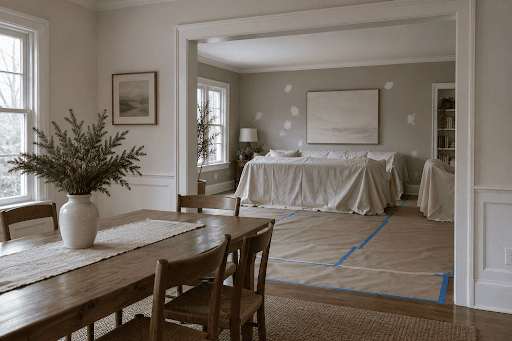
If you’re getting your Nashville home ready for holiday guests, you may suddenly notice every scuffed hallway, chipped baseboard, uneven patch, and wall color you’ve been meaning to change. When several rooms need attention, it can be tempting to put the entire house on the painting list at once.
A better approach is to decide which spaces matter most, define exactly which surfaces are included, and build the project around how your household needs to function while the work is underway.
At Pointer Painting, formerly Davis Custom Finishes, we can help you plan interior painting around your priorities, home, and schedule. Depending on the scope, dividing a larger project into phases may make more sense than opening every room at the same time.
Start With the Rooms Your Guests Will See Most
If your holiday schedule is approaching quickly, begin with the rooms that carry the most visual weight.
These may include:
- Entryways and foyers
- Living rooms
- Dining rooms
- Kitchens
- Family rooms
- Main hallways
- Guest bedrooms and bathrooms
Think about how people will actually move through your home.
The entryway may create the first impression, but a hallway connecting the living room, kitchen, and guest bathroom may receive more attention throughout the visit.
Prioritizing those spaces can help you create a noticeable update without automatically repainting the entire house before guests arrive.
Decide What Can Wait Until Later
Not every room needs to be included in the first phase.
Secondary bedrooms, private offices, closets, less-used bathrooms, or other areas may be easier to schedule after the holidays.
Create two lists: the spaces you’d most like completed before guests arrive and the projects that can reasonably wait.
This gives you a clearer starting point for discussing the schedule with your painting contractor.
It also prevents lower-priority work from taking time away from preparation and finishing in the rooms that matter most to you.
Define Exactly What “Painting the Room” Means
Whole-home interior painting can mean very different things depending on the project.
One homeowner may mean walls only. Another may expect walls, ceilings, baseboards, doors, window trim, crown molding, closets, and other surfaces to be included.
Before comparing estimates, identify what you want painted in each space.
Consider:
- Walls
- Ceilings
- Baseboards
- Crown molding
- Window trim
- Door casings
- Interior doors
- Closets
- Built-ins
- Other painted architectural features
A clear scope helps prevent misunderstandings and gives you a better basis for understanding the estimate.
Look at Wall Condition Before Choosing Colors
Color is usually the exciting part of an interior painting project, but the existing surfaces deserve attention first.
Walk through the rooms and look for:
- Nail holes
- Dents
- Hairline cracks
- Damaged drywall
- Old patches
- Peeling coatings
- Failed caulk at appropriate joints
- Rough areas
- Stains or discoloration
Point these areas out during your consultation.
Paint changes color and sheen, but it doesn’t physically flatten damaged drywall or make a raised patch disappear.
Understanding the preparation required before painting can help establish realistic expectations for the finished rooms.
Don’t Rush Preparation Because Guests Are Coming
A holiday deadline can make every day on the calendar feel important, but shortening necessary preparation isn’t necessarily the best way to make a project fit.
Repairs may need drying time. Prepared areas may need sanding or primer. Coatings need appropriate conditions and time between stages.
Trying to rush those steps simply to cover more rooms can work against the finished appearance you’re trying to achieve.
If the available window is limited, consider reducing the first-phase scope instead.
Completing fewer rooms with the appropriate preparation may make more sense than rushing through the entire house.
Include Trim and Doors in the Conversation
Fresh wall paint can make surrounding surfaces look different.
Baseboards that seemed acceptable before may suddenly look chipped or worn. Older door casings may stand out against newly painted walls. A ceiling or interior door may appear more discolored once everything around it has been refreshed.
That doesn’t mean every surface automatically needs repainting.
It does mean you should look at the room as a whole before defining the scope.
Ask whether walls, ceilings, trim, and doors should be addressed together or whether some existing finishes remain in good enough condition to stay.
Plan Furniture and Floor Protection
Before the project begins, ask how furniture, floors, fixtures, and belongings will be handled.
Some smaller items may need to be removed from the room. Larger furniture may be moved or protected depending on the work area and agreed scope.
Discuss:
- Furniture
- Artwork and decorations
- Electronics
- Rugs
- Window treatments
- Built-ins
- Flooring
- Fixtures
- Fragile belongings
Knowing what you’re responsible for moving beforehand can prevent a frantic furniture shuffle on the morning work begins.
Plan Around Pets
Pets deserve their own part of the project plan, particularly when several rooms are being painted.
Dogs and cats may be curious about unfamiliar people, open doors, tools, drop cloths, or freshly painted surfaces.
Determine where pets will stay while active work is happening.
You may be able to keep them in another portion of the house, or another arrangement may make more sense depending on the project and your animals.
Tell the painting team about pets before work begins so access can be planned accordingly.
Consider Children and Family Routines
If children are living in the home during the project, think about which rooms need to remain available.
Bedrooms may need to be completed in a particular sequence. Bathrooms and common areas may also need to stay accessible.
The same applies to adults working from home.
If someone needs a home office every weekday, mention that during planning rather than discovering the conflict after the room has already become a work area.
A room-by-room schedule can help keep more of the house usable throughout a larger project.
Create a Logical Painting Sequence
When several rooms are involved, sequence matters.
Rather than opening the entire house at once, discuss whether the project can progress through defined areas.
For example, one section may be prepared and painted before work moves to another part of the home.
The appropriate sequence depends on the scope and household needs.
Ask when each area is expected to become unavailable and when it can return to normal use.
That gives you a better way to plan meals, sleeping arrangements, work schedules, and holiday preparation.
Choose Colors Before the Schedule Gets Tight
Holiday painting becomes more difficult when major color decisions are still unresolved immediately before work begins.
Start evaluating colors early.
Compare potential selections with:
- Flooring
- Cabinets
- Countertops
- Furniture
- Rugs
- Trim
- Doors
- Natural light
- Evening lighting
- Adjoining rooms
If several rooms are visible together, consider how the colors transition from one space to another.
They don’t necessarily need to match. They should simply feel intentional when viewed together.
Choose Finishes for How the Room Is Used
Paint finish should be considered alongside color.
High-traffic areas such as hallways, kitchens, family rooms, and entryways may have different cleaning and maintenance requirements from guest bedrooms or other quieter spaces.
Rather than choosing sheen based solely on a general rule, discuss the particular product and how the room is used.
Consider:
- Traffic
- Cleaning frequency
- Moisture
- Existing wall condition
- Natural light
- Desired appearance
Higher-sheen finishes generally reflect more light and may make some surface variation more visible. Lower-sheen finishes can create a softer appearance.
Cleaning performance and durability also depend on the particular coating formulation.
Remember That Dry and Cured Aren’t the Same Thing
This matters when you’re trying to prepare the house for guests.
A freshly painted surface may feel dry before the coating is ready for regular cleaning, repeated handling, or furniture contact.
Ask when each room can return to normal use and what care is recommended while the coating continues to cure.
Frequently touched doors and trim may require particular attention.
If furniture needs to be moved back into place, ask when it can safely return near freshly painted surfaces.
Give Yourself Time Before Guests Arrive
Whenever possible, avoid planning the final painting stage for the exact day your guests arrive.
A little breathing room gives you time to return furniture and belongings, review the completed work, and prepare the room for normal use.
It also provides flexibility if the scope changes because additional preparation becomes necessary.
Tell Pointer Painting about your guest schedule during the consultation so the timing can be considered when discussing what’s realistic.
Consider a Phased Whole-Home Project
If you eventually want most of the interior repainted but don’t want the entire house disrupted before the holidays, consider phases.
For example, the first phase might include the entry, living room, dining room, and main hallway.
A later phase could address bedrooms, secondary bathrooms, offices, or other lower-priority spaces.
Keep records of paint colors, products, and finishes used during the first phase so later work can be coordinated.
Phasing can make a larger project easier to manage without abandoning the overall plan.
Plan the Final Walkthrough
Before the project is considered complete, review the agreed work.
Look at the rooms under the lighting you normally use and compare the finished surfaces with the scope.
The walkthrough may include:
- Agreed wall repairs
- Coverage
- Cut lines
- Wall and ceiling transitions
- Trim included in the project
- Doors included in the project
- Cleanup
- Remaining touch-ups, if any
Ask how the newly painted surfaces should be cared for and keep the paint information for future reference.
Frequently Asked Questions
Can a whole home be painted while we’re still living in it?
Often, yes, depending on the scope, products, ventilation requirements, and household needs. A phased or room-by-room schedule can help keep portions of the home available while other areas are being prepared and painted.
Should we move all of our furniture out before interior painting?
Not necessarily. The amount of furniture movement depends on the room and project scope. Ask what you should move before the crew arrives and how larger furniture and flooring will be protected.
Can we paint only the main rooms before the holidays?
Yes, if the scope and available schedule allow. Prioritizing entries, living spaces, dining areas, main hallways, and guest areas can provide a noticeable update while leaving lower-priority rooms for another phase.
How far before holiday guests arrive should we schedule painting?
The appropriate timing depends on the number of rooms, surface condition, repairs, coating system, drying requirements, and scheduling availability. Share your guest dates during your consultation so the proposed scope can be evaluated against the available time.
When can we put furniture back after painting?
That depends on the particular coating and project conditions. Paint can feel dry before it has fully cured, so ask when furniture can return near the walls, when doors can be handled normally, and when painted surfaces can be cleaned.
Get Your Nashville Home Ready for the Holidays
Holiday interior painting doesn’t have to mean turning the entire house into one giant work zone.
Start with the rooms that matter most, identify the exact surfaces you want painted, account for necessary repairs, and plan the sequence around your family’s daily routines. If the full project doesn’t fit comfortably before guests arrive, consider completing the highest-priority areas first and scheduling another phase later.
At Pointer Painting, formerly Davis Custom Finishes, we can help you build a realistic interior painting plan for your Nashville home.
Tell us which rooms matter most, when your guests are arriving, and how your household needs to use the home during the project. Request an estimate to discuss preparation, protection, color and finish choices, project sequencing, and a scope that works with your home and calendar.


